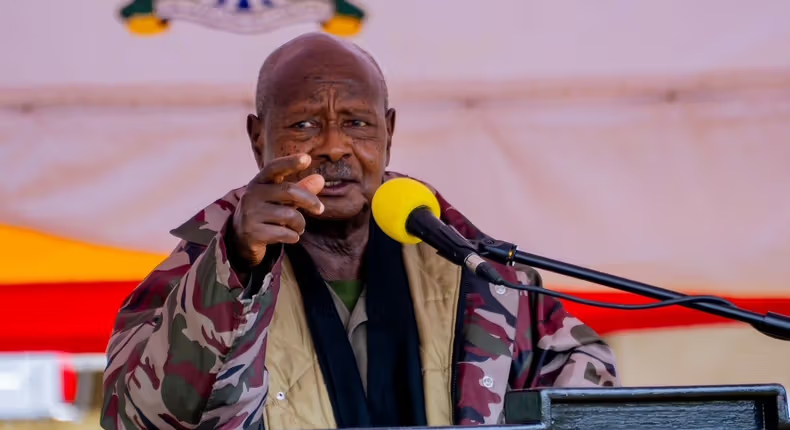
Museveni Rejects Income Tax and Excise Duty Bills, Citing Tax Loopholes and Business Impact
President Yoweri Museveni has declined to sign the Income Tax (Amendment) Bill, 2026 and the Excise Duty (Amendment) Bill, 2026 into law, sending both pieces of legislation back to Parliament for reconsideration. The President argued that several provisions could create unfair competition, encourage tax avoidance, and have adverse effects on the economy.
The two bills were passed by the 11th Parliament ahead of the 2026/27 national budget and the start of the new financial year in July.
Speaking during a parliamentary sitting on 14 July 2026, Deputy Speaker Thomas Tayebwa informed legislators that President Museveni had objected to specific clauses in both bills, particularly the proposed withholding tax on betting winnings and the significant increase in excise duty on single-use plastics.
According to Tayebwa, the President specifically opposed Clause 11 of the Income Tax (Amendment) Bill, which proposed a withholding tax on betting and gaming winnings while exempting winnings from land-based casinos licensed under the Lotteries and Gaming Act, 2016.
President Museveni argued that the exemption would create an uneven competitive environment by treating similar businesses differently. He warned that such a provision could encourage tax avoidance, as operators might restructure their businesses to benefit from the exemption.
In his communication to Parliament, the President stated that exempting land-based casinos from the withholding tax would create opportunities for revenue leakage and undermine tax fairness. He questioned why businesses engaged in similar economic activities should be subjected to different tax rules, saying there was no clear justification for the distinction.
Museveni also rejected the proposed amendment to the Excise Duty Bill that sought to increase the tax on single-use plastics from the current rate of 2.5 percent or US$70 per tonne to 25 percent or US$1,500 per tonne, whichever is higher.
While acknowledging the environmental objective of reducing plastic pollution, the President said the proposed increase was excessive and could place significant financial pressure on manufacturers that rely on plastic packaging.
He cautioned that the higher tax could negatively affect production, investment, and employment within Uganda’s plastics industry. Museveni further observed that the country is not yet adequately prepared to transition to alternative packaging materials, noting that affordable and practical substitutes for plastic remain limited.
He recommended that the government conduct further analysis before implementing such a substantial tax increase as part of its environmental protection strategy.
The return of the bills also sparked debate over parliamentary procedure. Bbale County MP Charles Tebandeke questioned whether the legislation should undergo a fresh legislative process, arguing that the 11th Parliament, which originally passed the bills, had since been dissolved.
Deputy Speaker Tayebwa dismissed concerns that the President had exceeded the constitutional deadline for returning the legislation. He reminded Members of Parliament that the Constitution allows the President up to 30 days from the date a bill is presented to either assent to it or return it to Parliament for reconsideration.
The two bills will now be reviewed by Parliament, which must consider the President’s recommendations before deciding whether to amend the legislation or pass it again.